
- All
- Product Name
- Product Keyword
- Product Model
- Product Summary
- Product Description
- Multi Field Search

Views: 129 Author: Site Editor Publish Time: 2026-05-18 Origin: Site


Understanding the various configurations available is essential for optimizing fabric characteristics, production volume, and material efficiency. Whether manufacturing seamless activewear or heavy-duty structural components, the machinery chosen dictates the limits of the textile design.
At its most fundamental level, industrial knitting splits into two primary mechanical architectures: flat systems and circular systems. This distinction is determined by the shape and layout of the needle beds, which ultimately governs the geometry of the fabric produced.
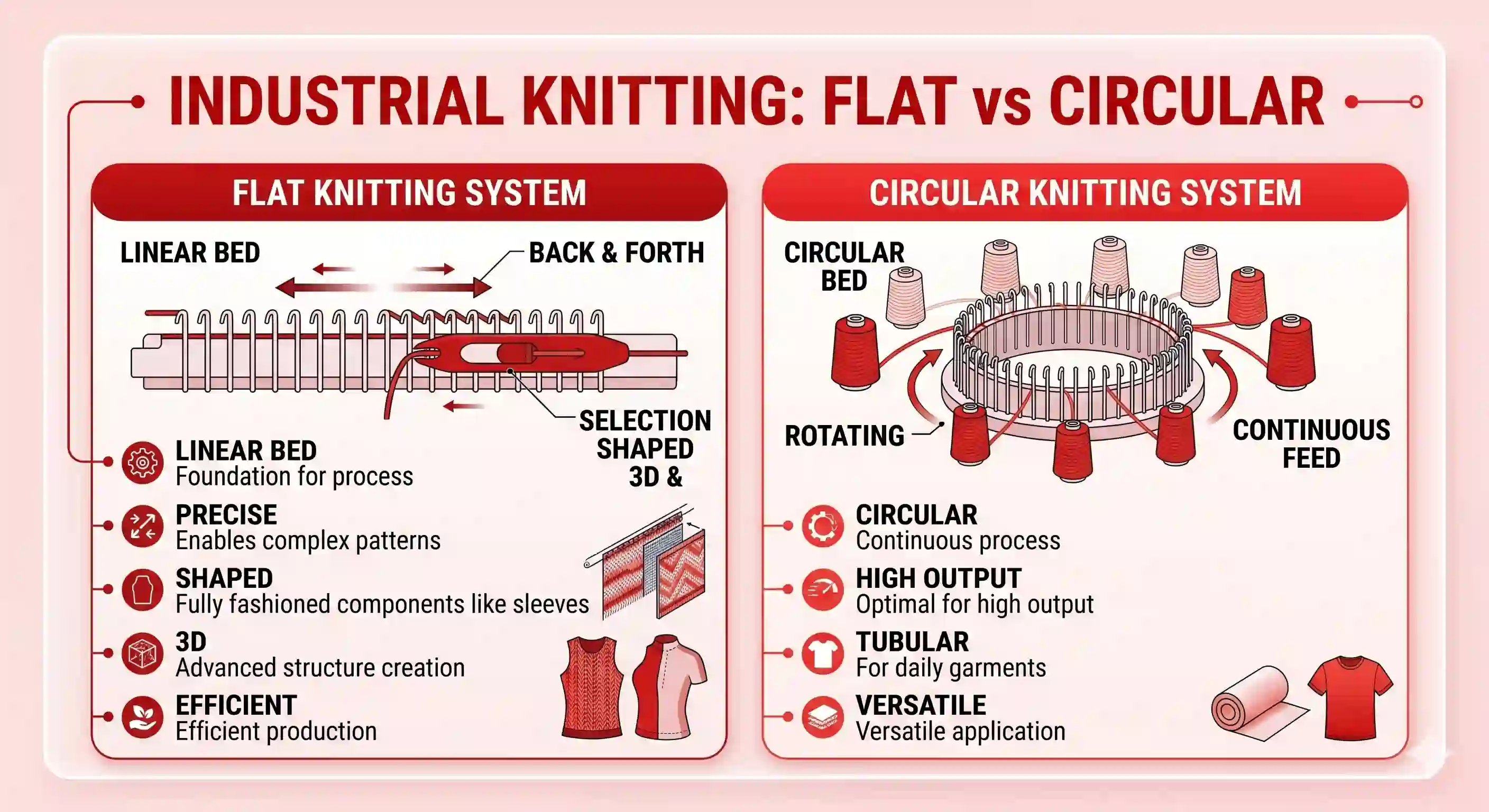
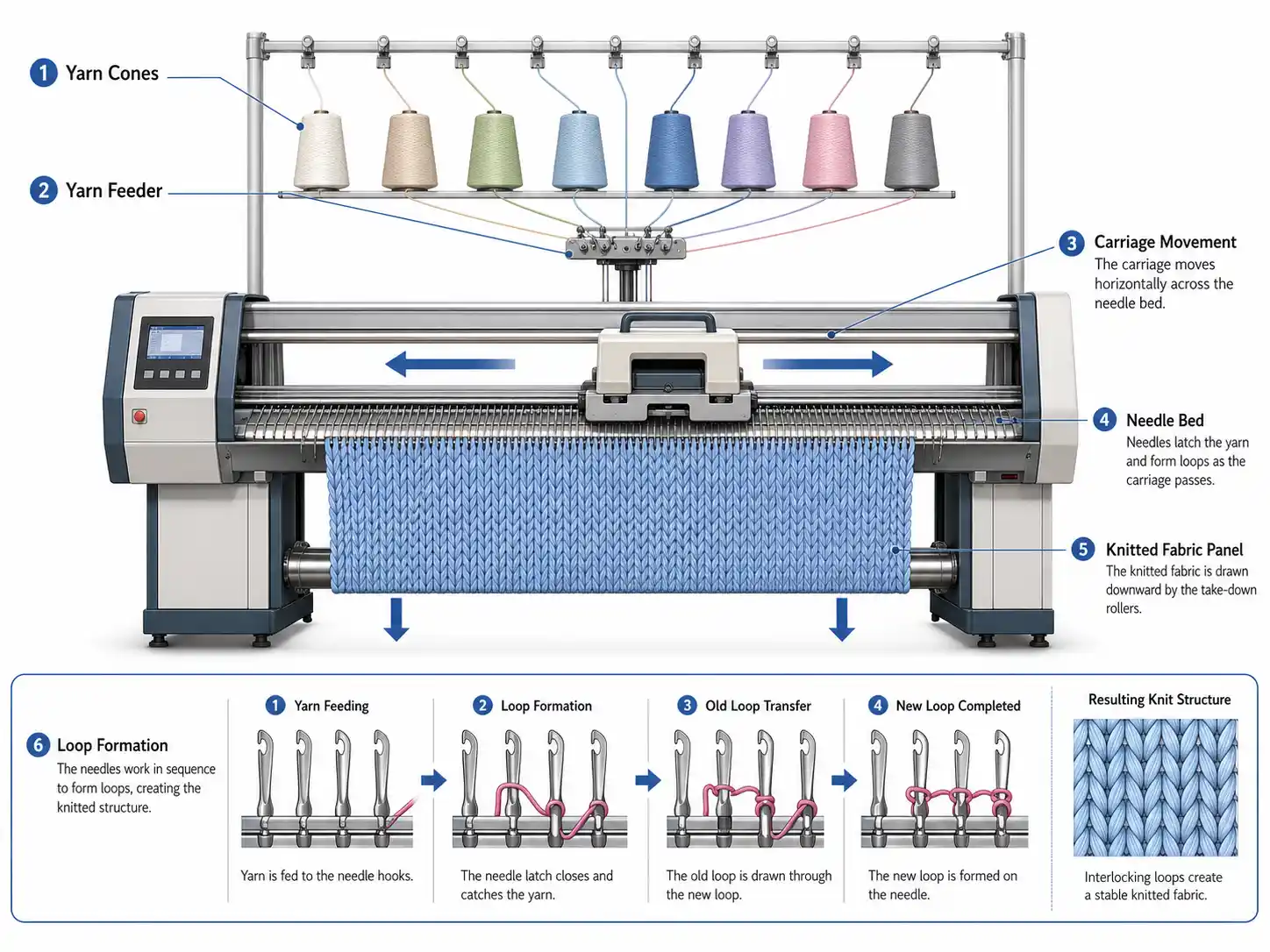
A flat bed system utilizes a straight, linear needle bed. The yarn carrier moves back and forth horizontally across these needles, forming rows of stitches sequentially. This back-and-forth movement introduces a specific rhythm to production, allowing for incredible control over fabric width and shape.
Because the needle configuration allows for individual needle selection via computerized controls, this setup excels at complex structural patterns. Industrial producers rely on the Flat Knitting Machine to manufacture fashioned pieces like collars, cuffs, heavy knit sweaters, and even three-dimensional components used in modern footwear. The ability to increase or decrease the active needle count mid-process means fabric can be shaped directly on the machine, drastically reducing subsequent cutting waste.
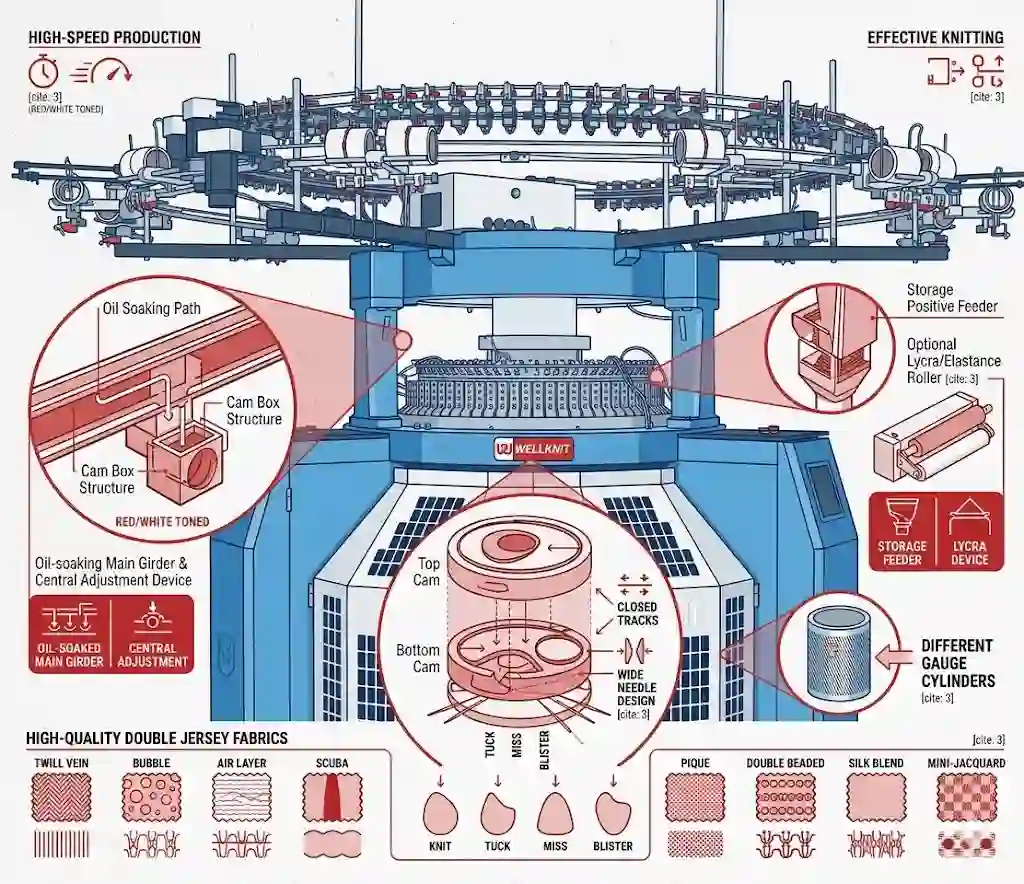
When pure volume and continuous speed are the priority, the linear approach gives way to a cylindrical setup. In this configuration, the needles are arranged in a circle within a rotating cylinder. As the cylinder spins, yarn is fed simultaneously from multiple packages arranged around the circumference of the machine.
This continuous rotation eliminates the reciprocal slowdown found in flat beds, resulting in massive output rates. A Circular Knitting Machine produces a seamless tube of fabric. This seamless material is highly valued for standard apparel items like t-shirts, hosiery, and activewear. Depending on the final application, these fabric tubes can either be used in their cylindrical form or slit open along one side to create a wide, flat sheet of fabric for standard automated cutting lines.
Beyond the external shape of the needle bed, industrial knitting equipment is further categorized by how the yarn is introduced to the needles and how many needle sets work together.
The distinction between weft and warp techniques determines the structural integrity and elasticity of the final textile.
Weft Knitting: The yarn runs horizontally, across the width of the fabric. Each needle loops the yarn through the previous row's loops successively. This creates a highly elastic fabric that conforms easily to shapes, though it remains susceptible to running or unravelling if a thread breaks.
Warp Knitting: Dozens, or even thousands, of individual yarns are fed vertically, parallel to the fabric length. Every needle is supplied by at least one separate yarn guide, creating zig-zagging loops that interlock across neighboring columns.
According to textile processing research available via industry resources like Textile World, warp-knit fabrics offer superior dimensional stability and structural resilience. This makes them less prone to ladders or runs, which is why warp machinery is dominant in the production of technical textiles, automotive interiors, and industrial mesh.
Another layer of mechanical complexity depends on whether the equipment employs one or two needle beds. Single jersey machines utilize a solitary cylinder or flat bed, producing a fabric that looks distinctly different on the front side (smooth V-shaped stitches) than on the back side (wavy purl loops). Single jersey materials are typically lightweight but tend to curl at the edges when cut.
In contrast, double jersey systems feature two interconnected needle beds (such as a cylinder and a dial in circular setups). The two sets of needles interlace loops from both sides simultaneously. This produces a thicker, reversible fabric—such as rib or interlock structures—that lays completely flat, offers greater thermal retention, and provides excellent recovery after stretching.
To synthesize how these engineering variations impact practical manufacturing output, the table below outlines the core attributes of the primary industrial categories.
Selecting the appropriate hardware configuration requires a careful balance between artistic flexibility and strict economic throughput. A high-volume facility manufacturing basic consumer garments will naturally lean heavily toward automated circular systems due to their unmatched yield over a standard production shift. The mechanical simplicity of continuous rotation keeps operational overhead low per yard of fabric produced.
However, as fast fashion cycles demand faster pivots and high-end brands focus on zero-waste initiatives, the versatility of the computerized flat bed cannot be overlooked. Investing in a highly adaptable knitting machine enables manufacturers to shift production lines from intricate outerwear to technical industrial components with minimal mechanical retooling. Ultimately, the choice rests on whether the production model relies on the rapid creation of raw fabric rolls or the precise execution of pre-shaped garment segments.If you want to learn more, you can read Can Knitting be Done by Machines? A Comprehensive Guide to Knitting Machine